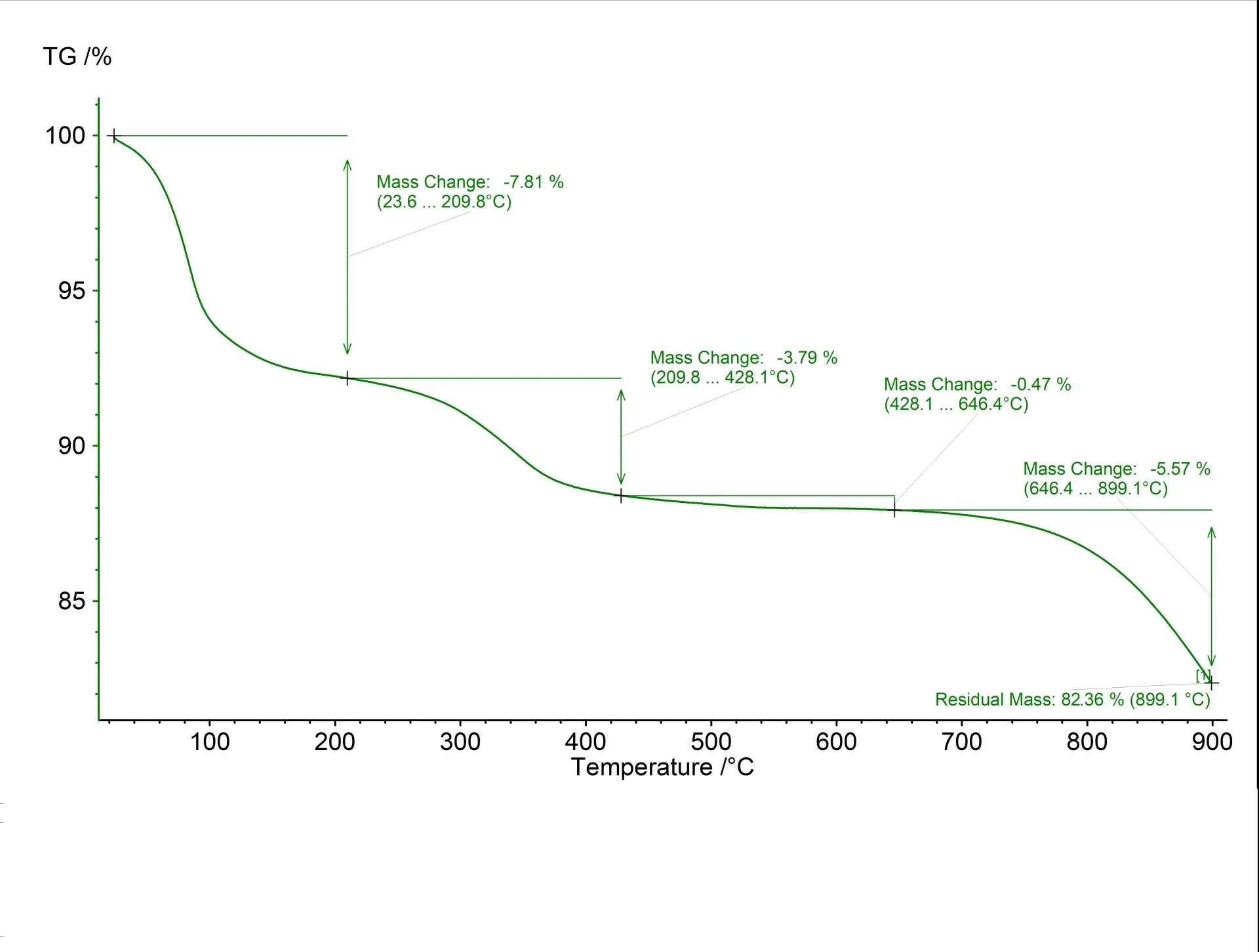
TGA · dried powder
Thermogravimetric Analysis (TGA)
Measures how mass changes as the sample is heated to ~900°C — the core test of thermal stability.
- Step 1 (23–210°C)
- −7.81% (surface & interlayer water)
- Step 2 (210–428°C)
- −3.79% (dehydroxylation)
- Step 3 (428–646°C)
- −0.47%
- Step 4 (646–899°C)
- −5.57% (carbonate loss)
- Residual mass
- 82.36% at 899°C
Why it sells: only ~17.6% of the coating is lost even at 899°C. The rest stays as a non-combustible mineral shield — and the staged, endothermic water release actively cools the fire.
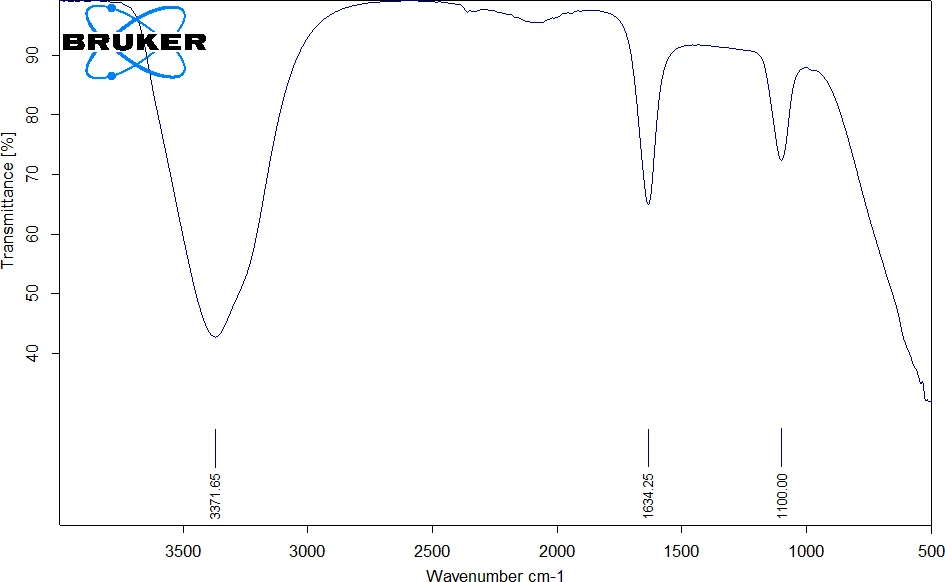
FTIR · colloid
FTIR Spectroscopy
Identifies the chemical bonds present, confirming the functional groups behind the fire-retardant action.
- 3371 cm⁻¹
- O–H stretch (hydroxyl & water)
- 1634 cm⁻¹
- H–O–H bending (bound water)
- ~1100 cm⁻¹
- carbonate / anion band
- <800 cm⁻¹
- metal–oxygen lattice
Why it sells: the strong hydroxyl and bound-water signals are the built-in "fire extinguisher" — the water reservoir that releases as cooling vapour under heat.
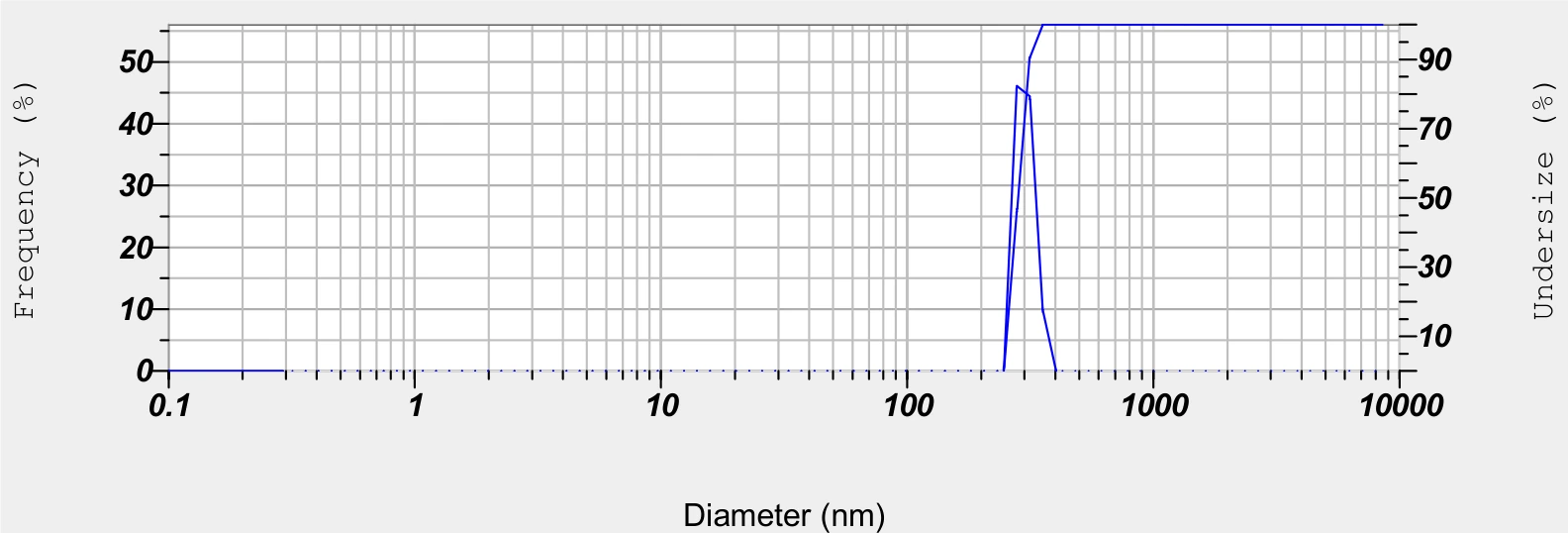
DLS / PSA · colloid
Dynamic Light Scattering (DLS)
Measures particle size in the liquid colloid — key to how evenly the coating spreads and penetrates.
- Mean diameter
- 284.6 nm
- Mode
- 278.4 nm
- Std. deviation
- 23.1 nm (narrow)
- Distribution
- Monomodal, nano-scale
Why it sells: a fine, uniform ~285 nm colloid penetrates wood grain, paper and fabric fibres and forms an even film — better coverage per litre, no gritty build-up.
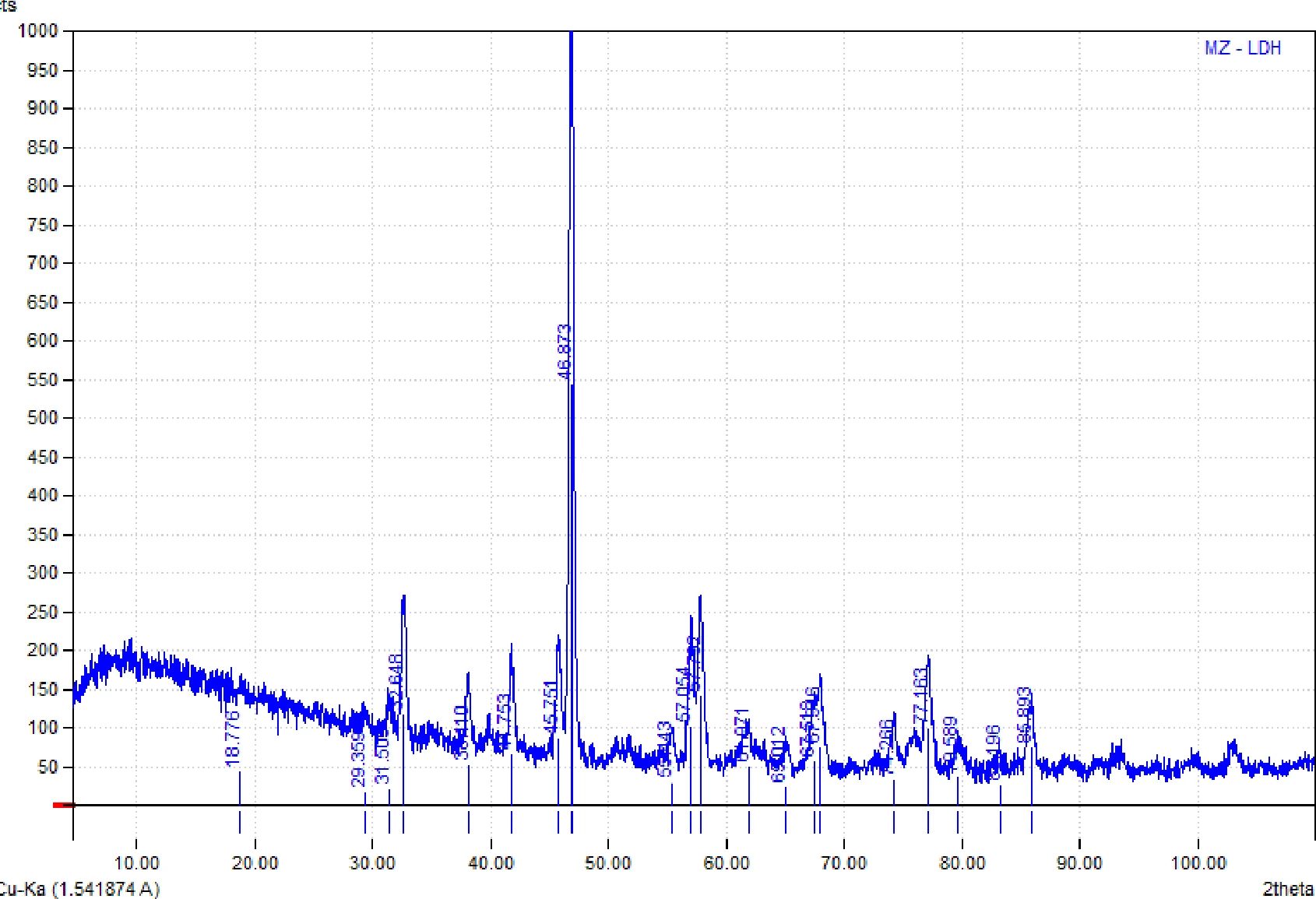
XRD · dried powder
X-Ray Diffraction (XRD)
Confirms the crystal structure — proof that the active LDH phase is really present.
- Radiation
- Cu Kα, λ=1.5419 Å
- Range
- 4.5° – 110° 2θ
- Phase
- Crystalline layered double hydroxide
- Data points
- 3,537
Why it sells: XRD verifies you're getting genuine crystalline LDH — the engineered mineral responsible for the halogen-free, endothermic fire protection.